The American Animal Hospital Association says corporate chains control 50% of veterinary revenues despite owning just 25% of practices. Mars Veterinary Health operates over 3,000 hospitals worldwide, according to the SDN Review. But here's what consolidation data doesn't show - independent practices achieve stronger client visit retention than corporates, and 55% of veterinary associates actually prefer working in independent practices, according to data from Frontiers in Veterinary Science.
The independents thriving aren't trying to become mini-corporate-chains. They're doing something different.
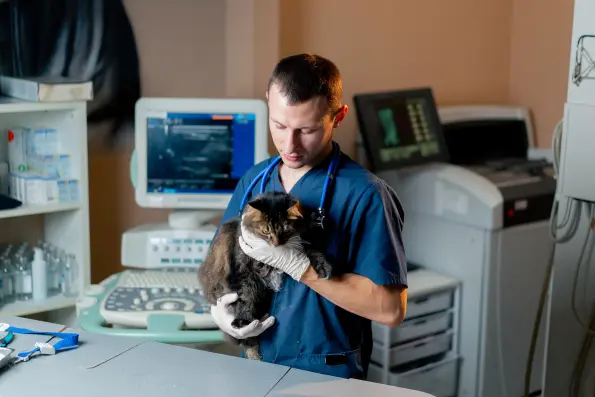
Buying equipment like a chain
Smart independents joined buying groups - IVPA, IAHA, PSIvet - and they're getting volume discounts similar to the corporate chains.
The real win is standardization. When you're running five different pump brands, you're paying for five training programs, five different tubing sets, five maintenance schedules, and five troubleshooting protocols. Practices that standardized on a single pump manufacturer cut training time from two weeks to three days.
Corporate chains standardized years ago. Independent practices are catching up.

Tracking what actually matters
CoVet says high-performing practices run appointments 8-15 minutes faster than inefficient competitors. With 25 daily appointments, that's $32,000 to $67,500 in annual revenue evaporating because workflows are messy.
Winning practices track…
Minutes per appointment type.
Technician utilization rates (should generate $190,000+ in revenue per year, according to ProVet Cloud).
Equipment downtime costs.
Client wait times from check-in to exam room.
One practice discovered they were losing $2,000-$3,000 monthly because their two CRI pumps kept breaking. They bought refurbished backups that paid for themselves in five months.
You don't need a whole department. You just need to measure what matters.
Using equipment to retain staff
With 23.4% technician turnover, replacing a high-level employee costs up to two times their annual salary, according to the American Animal Hospital Association. New graduates carry $183,302 in debt and gravitate toward corporate salaries - but most prefer independent practice culture.
Show them proper tools during interviews. One practice advertises equipment quality in job postings and dropped turnover from 35% to under 15%. Good equipment tells staff you respect their work.
Getting serious about maintenance
Running equipment until it dies costs 25-30% more than scheduled maintenance, according to Re-leased. Preventive maintenance delivers 12-18% operational cost reduction with 400% ROI.
Winning practices schedule:
Daily pump checks before first use.
Monthly cleaning and function testing.
Quarterly professional calibration.
Annual full service with certified technicians.
They time major maintenance during January-February when revenue dips to 18-19% of annual total - not during the April-June rush when downtime costs thousands.
They track every failure. After a year of data, patterns emerge showing which equipment runs forever and which fails constantly.
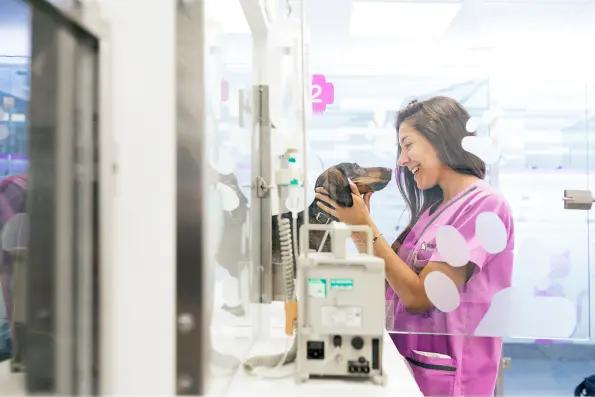
Competing on value, not price
Only 28% of clients are extremely satisfied with veterinary costs, according to Today’s Veterinary Business. You cannot out-cheap a corporate chain with centralized purchasing. Don't try.
When a client compares your $2,400 estimate to the corporate clinic's $1,900, explain the difference confidently. Don't just list "IV fluids - $75" and "monitoring - $150." Tell them what that means - "We're delivering better monitoring and more personalized care. During surgery, a dedicated technician monitors your pet's vital signs continuously. Your pet receives precise pain medication through programmable pumps. This is significantly safer and more comfortable than intermittent injections."
Planning for seasonality
According to the American Veterinary Medical Association, Q2 generates 28.6% of annual revenue. Q4 produces just 18.5%.
Some practices use January-February to:
Schedule equipment maintenance and calibration.
Run staff training on emergency protocols.
Review crash cart inventory and emergency drug sheets.
Plan equipment purchases and budget for the year ahead.
They also bank 15-20% of spring income to cover winter operations.
In Q4, they also market aggressively with things like winter wellness campaigns, senior pet care, weight management programs, dental health month promotions.
According to AVMA data, practices doing this pull Q4 revenue from 18.5% up to 22%.
The window is open now
Rising interest rates slowed corporate acquisition pace. The practices coming out of this period stronger - better equipment, workflows, staff retention, financial management - will either thrive as independents or sell at premiums when ready.
Corporate chains are good at systems and scale. You're good at relationships and flexibility. Lean into what makes you special.
References
American Animal Hospital Association. "Corporate consolidation and the rise of private equity." AAHA Trends Magazine, 2025.
Student Doctor Network. "Mars, Inc: Candy, Clinics, and the Consolidation of Veterinary Medicine." SDN Review, September 2025.
Frontiers in Veterinary Science. "Making the case for a resurgent U.S. independent veterinary practice segment: a SWOT analysis." January 2025.
CoVet. "The CoVet Veterinary Practice Efficiency Playbook." 2024.
Provet Cloud. "Provet Cloud 2025 Veterinary Insights Report reveals top industry trends and challenges." 2025.
The Hound. "The Ultimate Guide for Better Retention in Vet Med." 2024.
Re-leased. "Preventive vs Reactive Maintenance: Costs, ROI, Best Practices." 2024.
American Veterinary Medical Association. "Practices busier than ever, except for one time of year." JAVMA News.
Today's Veterinary Business. "Exploring Solutions to the Rising Cost of Pet Care." June 2024.