Walk through most companion animal practices and you'll find a hodgepodge of equipment brands from room to room. Each veterinary infusion pump was bought at a different time, from a different source, for a different reason. Maybe one came from a departing vet. Maybe two were picked up at auction. Maybe a rep had a deal that week.
It's a fleet nobody designed. And every time a new tech walks in the door, they have to learn all of it.

This blog covers one section of our 2026 Veterinary IV Pump Survey. The full report includes data on equipment spending, staffing costs, fluid therapy trends, and business sustainability across 114 companion animal practices.
Here's what our survey found
We asked 114 companion animal practices which CRI pump brands they currently run. The "check all that apply" answers confirmed what most of you already live with.
Brand | % of practices running it |
Baxter | 52% |
Hospira/ICU Medical (Plum) | 34% |
B. Braun | 28% |
Medfusion | 22% |
Heska | 19% |
Jorvet | 15% |
Practivet | 11% |
Other | 14% |
Add those up and you'll notice the problem. The totals go well past 100%, which means the typical practice isn't running one brand. It's running three. Sometimes four.
An independent practice owner in Indianapolis put it plainly:
"Every brand does it differently and we have three brands in the building. A tech who's perfectly competent on the Baxter gets confused the first time they touch the Medfusion. It's like learning to drive three different cars with different dashboards."
Three brands means three training curves
95% of practices in our survey told us they have meaningful CRI pump training challenges for new staff. The top three answers all point to the same root cause.
New staff training challenge | % who selected |
Programming flow rates | 28% |
Recognizing alarm types | 22% |
Troubleshooting errors | 21% |
Calculating drug concentrations | 16% |
Loading/priming lines | 8% |
No significant challenges | 5% |
Programming, alarm recognition, and troubleshooting are the three skills that are most brand-specific. Every pump has its own menu path to set a flow rate, its own set of audible alarm patterns, and its own troubleshooting sequence when something goes wrong. Teach a tech on one platform and you've taught them one platform. Teach them on three and the learning curve triples.
Layer that on top of our turnover data and the picture gets sharper.
51% of practices report annual turnover above 20%.
86% have at least one open position right now.
82% say licensed vet techs are the hardest role to fill.
49% have all clinical staff, including assistants, operating pumps.
So half of practices are replacing a meaningful chunk of their team every year, the hardest role to fill is also the role most likely to touch a pump, and in half of practices the newest, least experienced people are expected to run the equipment.
What the mixed-fleet learning curve actually costs
A new licensed vet tech in a typical practice needs to reach independent competency on every pump in the building. Here's what that looks like in real time.
Training step | Single-brand fleet | Three-brand fleet |
Programming walkthroughs | 1 | 3 |
Alarm familiarization | 1 set | 3 sets |
Troubleshooting reference | 1 manual | 3 manuals |
Time before full independence | 2-4 weeks | 6-10 weeks |
That extra time is a real cost. At a licensed tech wage of roughly $25/hour, an additional 4 weeks of supervised competency-building runs about $4,000 per hire in labor alone. That doesn't count the senior tech or DVM hours spent supervising.
Now multiply by turnover. A practice with 8 clinical staff and a 25% turnover rate hires 2 new techs a year. That's $8,000 a year spent training the same people on three different pump interfaces. Every year.
And the meter runs in the other direction too. A practice owner in San Jose told us his team loses 15-20 minutes per tech per shift just silencing alarms and resetting pumps across the mixed fleet. Four techs, one hour of lost productivity per day. That's what fragmented equipment looks like on a Tuesday.
Error risk during the learning curve
Training time is the visible cost. The less visible one is what can happen during the weeks a new hire is still figuring out which alarm on which pump means what.
A corporate group vet in Denver said it well:
"The most common alarm is the air-in-line sensor going off when there's no visible air. It's a nuisance during routine procedures and genuinely stressful during emergencies when every alarm feels like it could be real."
A Chicago practice owner put it sharper:
"New staff don't know which alarms are actual problems and which ones are the pump being temperamental. Teaching them the difference without making them cavalier about alarms is a tightrope."
Multiply that tightrope by three interfaces. A new tech who has learned that the Baxter's occlusion alarm usually means a kinked line may assume the same is true on the B. Braun, where the same alarm behaves differently. That assumption is the kind of small, understandable mistake that turns into an incident report.
How to standardize without replacing everything at once
Standardization doesn't mean walking into the practice on Monday and throwing out two-thirds of your pumps. It means making a decision about which platform you're building around and then migrating toward it over 12 to 24 months.
Step 1: Pick your standard
Look at what you already own. If 52% of practices run Baxter, there's a reason. It's a widely supported platform with deep parts availability and staff who are more likely to have trained on it elsewhere. But the right standard for your practice is the one you already have the most of, have the most staff competency on, and can source reliably.
Step 2: Replace the outliers as they fail
You don't need a full refresh. Every time one of the off-brand pumps throws its final error or hits a point where repair cost crosses 50% of replacement value, replace it with a patient-ready unit on your chosen platform. Within 2 years, attrition alone takes care of most of the fleet.
Step 3: Use buyback to offset cost
AIV Vet buys back old and obsolete pumps. That gets trade-in value out of the off-brand units you're retiring and puts it toward the patient-ready replacements. The net cost of standardization drops significantly when the pumps you're replacing still have value on the other end.
Step 4: Standardize your training materials
Once your fleet is consolidated, your onboarding materials get simpler. One programming walkthrough. One alarm reference. One troubleshooting sheet. New hires reach independent competency in half the time, and senior staff stop losing hours to supervised pump use.
Standardization doesn't have to mean buying new
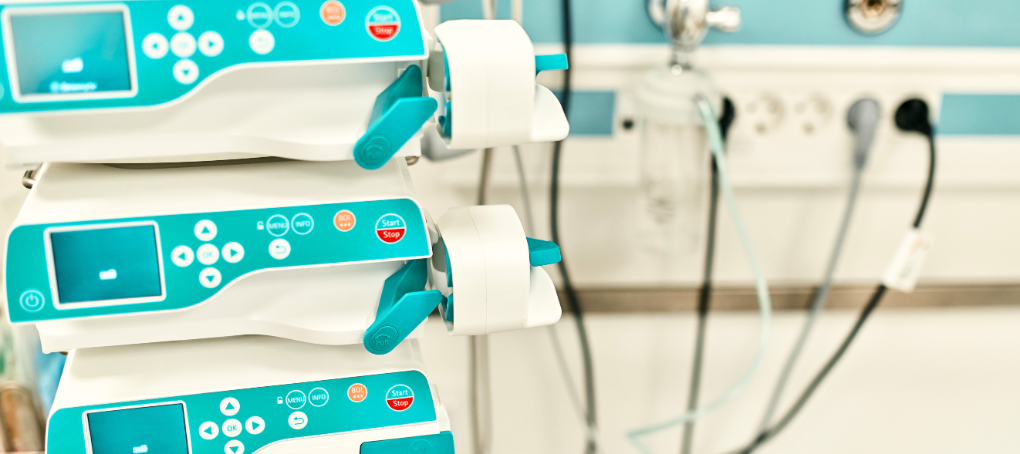
Image courtesy of Envato
The reason most practices end up with a mixed fleet in the first place is cost. New OEM pumps are expensive enough that when one dies, you buy whatever's available and affordable at that moment, even if it's a different brand than everything else. Standardization just compounds that problem at full OEM pricing.
Patient-ready refurbished pumps are how you get out of the cycle. Almost all major brands on your floor are available recertified, fully tested, and warrantied. That makes it realistic to replace off-brand units with matches to your chosen platform as they fail, instead of grabbing whatever's on sale. Buyback credit on the pumps you retire offsets what you spend on the replacements.
It also solves the orphan problem. When an OEM discontinues a model, refurbished supply keeps that platform in circulation for years beyond the manufacturer's end-of-life date. Your standardization decision holds up even if the brand you chose has moved on.
What does this mean for your practice?
A mixed pump fleet is the equipment version of deferred maintenance. Each individual purchase decision made sense at the time, but the cumulative result is a training burden that scales with turnover and an error risk that scales with staff inexperience.
Four things worth doing based on what 114 practices told us.
Count your brands. If you have three or more pump platforms in the building, you're paying a training tax every time you hire.
Pick a standard based on what you already have and what your staff already know.
Replace off-brand pumps at end-of-life with patient-ready units on your chosen platform, not new OEM units.
Use buyback credit on the retired pumps to offset the cost of standardization.
About this Data
This data comes from the 2026 AIV-Vet Veterinary IV Pump Survey (114 companion animal practices across the U.S.). Workforce data is from the 2025 AVMA Report on the Economic State of the Veterinary Profession, Mars Veterinary Health (2023), and the AAVMC (2024).
AIV Vet has been in the veterinary equipment business for almost 2 decades. If your practice is running three pump brands and you're tired of training new staff on all of them, we should talk.