Most practice owners estimate it costs $5,000 to $8,000 to replace a vet tech. That number misses the real damage. The vet tech shortage is structural, the training pipeline is broken, and the math to fix it doesn't work on any timeline that helps your practice this year or five years from now.

This blog covers one section of our 2026 Veterinary IV Pump Survey. The full report includes data on equipment spending, staffing costs, fluid therapy trends, and business sustainability across 114 companion animal practices.
The pipeline problem in three numbers
The AAVMC estimates U.S. companion animal practices need over 50,000 additional vet techs right now. At the current rate of graduates entering the workforce, it would take 30 years to meet projected 2030 needs. And the pipeline is moving in the wrong direction: 43% of vet tech training programs reported declining enrollment over the past five years.
The shortage math | |
Additional vet techs needed now | 50,000+ |
Projected job growth (2022-2032) | 21% |
Annual openings projected | ~14,800 |
Tech training programs with declining enrollment | 43% |
Time to close the gap at current training capacity | ~30 years |
Sources: AAVMC Workforce Statement (2022), Frontiers in Veterinary Science (2024), U.S. Bureau of Labor Statistics
82% of practices say techs are the hardest role to fill
Our 2026 Veterinary IV Pump Survey asked 114 companion animal practices which positions are hardest to fill.
Position | % who ranked in top 3 |
Licensed technicians | 82% |
Veterinarians | 64% |
Assistants | 48% |
Reception/customer service | 37% |
Practice manager | 19% |
One independent practice owner in Baltimore put it this way: "Licensed techs. That's been the answer for years. We lose them to human nursing, to corporate practices offering sign-on bonuses, and to burnout."
A practice owner in Indianapolis described the revolving door: "We can find warm bodies for assistant roles but finding someone who actually wants to build a career here is the hard part. Good ones go get their tech license and then leave for higher pay somewhere else."
This is the staffing version of a leaky bucket. You train assistants up, they get licensed, and then the market pulls them out.
What one tech vacancy costs
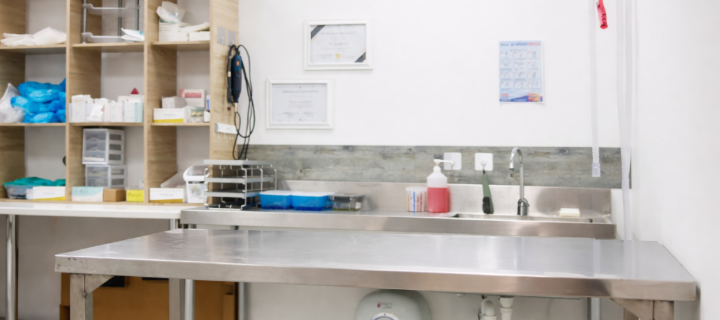
Image courtesy of Envato
Our survey found that 42% of practices turn away 10% or more of appointment requests because they don't have the staff. One practice owner in San Jose estimated that the 15% of clients he turns away represents roughly $180,000 per year in lost revenue.
A tech operates infusion pumps, runs bloodwork, assists in surgery, and manages recovery simultaneously. When one leaves, every one of those functions takes a hit. Overtime climbs, remaining staff burn out, and the next departure accelerates. One practice owner in Kansas City had to close on Saturdays because he couldn't staff it. That was 20% of his weekly revenue.
The cascade in one table
When a tech leaves... | What it costs |
Recruitment and onboarding | $5,000-$8,000 (direct) |
Turned-away appointments (42% of practices lose 10%+ of requests) | Varies; one practice estimated $180,000/year |
Overtime for remaining staff | Accelerates the next departure |
Reduced same-day/Saturday availability | 10-20% of weekly revenue at risk |
Training new hire on equipment, protocols, workflow | 3-6 months to full productivity |
The 22% of practices in our survey who said no retention strategy has worked aren't doing anything wrong. They're facing a labor market where qualified replacements don't exist in sufficient numbers.
Tech time is a finite resource. Protect it.

Image courtesy of Envato
If you can't hire enough techs, the only variable left is how you use the tech hours you have. Think about tech time the way you think about exam room time: finite, non-expandable, and worth protecting from low-value tasks.
Manual fluid monitoring is one of the clearest examples. A patient on gravity drip needs a tech to check the drip rate, bag level, and patient response every 15-20 minutes. Over a standard 8-hour fluid therapy period, that's roughly 76 minutes of monitoring per patient per day. Across several patients, you're burning full tech-hours on a task that doesn't require clinical judgment.
An automated pump eliminates most of that time. It controls the rate, alerts the tech only when something needs attention, and frees those 76 minutes for higher-value work.
You may not be able to hire more techs. But you can make each tech hour go further by removing the tasks that don't require their training and judgment.
Thirty years is a long time to wait for the pipeline to catch up.
The data in this post comes from AIV Vet's 2026 Veterinary IV Pump Survey of 114 companion animal practices, the2025 AVMA Report on the Economic State of the Veterinary Profession, theAAVMC Statement on U.S. Veterinary Workforce, andFrontiers in Veterinary Science.