Running a veterinary clinic within a corporate structure presents its own distinct challenges. You've got corporate equipment standards to follow, regional management expectations to meet, and efficiency metrics that didn't exist when many locations were independent. Maybe you sold your practice and stayed on as medical director. Maybe you manage a location that was always corporate-owned. Either way, you're balancing quality patient care against operational requirements that come from people who aren't in the exam room with you.
AIV-Vet published 18 blogs in 2025 addressing the realities facing veterinary professionals across all practice types. Based on engagement from clinic managers, medical directors, and veterinarians at corporate-owned practices, these five blogs resonated most with professionals trying to maintain excellent care while meeting corporate operational expectations.
1. Key findings from our 2025 survey of veterinary clinics that use IV pumps
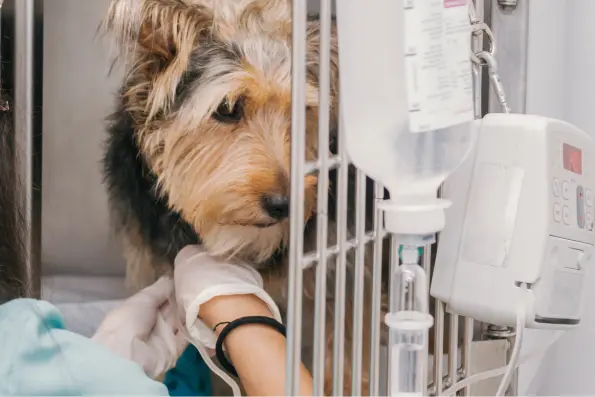
Image courtesy of Envato
Corporate practices operate under standardized equipment protocols, but those protocols are only as good as the data behind them. This blog provided hard numbers that medical directors could take to regional management when advocating for equipment upgrades or maintenance schedule changes.
The survey revealed that 97% of vets experienced recurring problems with their pumps, regardless of practice size or ownership structure. Equipment malfunctions impacted client satisfaction and clinic reputation for 81% of respondents. For corporate practices running five or six pumps to handle higher patient volumes, equipment failures averaging 3.2 per pump annually translated to potentially $9,600 in lost productivity.
What made this particularly valuable for corporate clinic managers was having industry-wide data to support requests that might otherwise get stuck in approval processes. When you can show regional management that equipment downtime costs $150-$400 per incident and your clinic experiences this 15-20 times annually, you're speaking their language. The ROI case for preventive maintenance or backup equipment suddenly becomes clear.
Corporate medical directors told us this survey data helped them justify working with specialized repair services rather than waiting for corporate's standard equipment replacement cycles. When the numbers show that proactive maintenance delivers 400% ROI compared to run-to-failure approaches, regional managers listen.
Read the full blog: https://www.aiv-vet.com/blog/news-4/key-findings-from-our-2025-survey-of-veterinary-clinics-that-use-iv-pumps-498
2. How to capitalize on the feline healthcare boom

Image courtesy of Envato
While overall veterinary visits declined 2.3%, feline visits kept growing. Corporate practices with multiple locations and extended hours were positioned to capture disproportionate market share - if they adapted their operations properly.
The blog addressed the specific challenge corporate clinics face with feline patients. Cat owners prefer quieter, less chaotic environments, which doesn't naturally align with high-volume corporate practice flow. But corporate practices that designated specific feline appointment blocks, created cat-only waiting areas, or established dedicated feline wellness days saw measurably higher cat patient retention.
What resonated with corporate clinic managers was the ROI framework. The piece showed that relatively modest facility modifications and staff training investments could capture significant growth in a market segment expanding faster than traditional canine care. For corporate practices with multiple locations, implementing these changes across a region created competitive advantages that independent single-location clinics couldn't match.
The blog also provided implementation guidance that worked within corporate constraints -
- How to pilot programs at one location before regional rollout
- What approval timelines to expect
- Which metrics to track to justify expansion.
Corporate medical directors appreciated having a roadmap that acknowledged their operational reality instead of assuming they could unilaterally redesign their clinics.
The data showing cats represent a $43 billion market (30% of the entire pet industry) with ownership increasing while dog ownership declines gave corporate managers the ammunition they needed for budget discussions at the regional level.
Read the full blog: https://www.aiv-vet.com/blog/news-4/how-to-capitalize-on-the-feline-healthcare-boom-513
3. How to convince your practice manager to invest in IV pumps (and make your life easier)

Image courtesy of Envato
Even in corporate settings with more substantial equipment budgets, getting approval for clinic-level purchases isn't automatic. This blog gave veterinary technicians working in corporate practices the framework to build business cases that corporate decision-makers would actually approve.
The piece provided three compelling arguments that worked within corporate financial structures - time savings that translate to more appointments per day, precision that reduces complications and improves patient outcomes, and modern equipment that builds client confidence. Each argument came with specific language for framing requests in terms corporate managers understand - ROI, efficiency gains, risk reduction, competitive positioning.
What made this particularly useful for corporate practice staff was the five-step approach to making the case.
Do homework on specific models and pricing.
Speak the language of ROI with hard numbers.
Suggest phased implementation that fits corporate budget cycles.
Address common objections with data from the survey.
Follow up with additional information when requests move up the approval chain.
Corporate veterinary technicians appreciated that the blog acknowledged their reality - they often can't just talk to the owner over lunch and get equipment ordered by Friday. There are approval processes, budget committees, and regional standards to navigate. The framework worked within those constraints instead of pretending they don't exist.
The survey data showing that 100% of vet techs, vets, and practice managers consider their pumps indispensable gave corporate staff the confidence that they weren't asking for nice-to-have equipment - they were advocating for tools the entire industry considers essential.
Read the full blog: https://www.aiv-vet.com/blog/news-4/how-to-convince-your-practice-manager-to-invest-in-iv-pumps-and-make-your-life-easier-497
4. Federal veterinary layoffs

Image courtesy of Envato
In April, more than 140 veterinarians and staff at the FDA's Center for Veterinary Medicine were laid off. For corporate practices with centralized purchasing and compliance departments, the ripple effects looked different than for independents - but they were no less significant.
This blog addressed what corporate medical directors needed to know about coming disruptions - longer drug approval times affecting formulary options, slower regulatory responses on compounding questions, weaker pet food oversight requiring more vigilant supplier management, and gaps in disease surveillance that regional networks would need to fill.
Corporate clinic managers found the actionable preparation steps valuable. Build reference libraries of FDA guidance documents before they become harder to access. Diversify supplier relationships beyond corporate's primary vendors. Strengthen connections with state veterinary officials who were becoming primary resources. Create regional communication protocols for sharing information about drug shortages and disease patterns.
What resonated particularly with corporate veterinarians was the section on opportunities. As federal resources shrank, corporate practices with strong community ties could position themselves as local trusted sources for biosecurity guidance and pet food safety information. Corporate marketing departments could leverage this expertise across multiple locations, creating competitive advantages over independents without the same marketing resources.
The piece gave corporate medical directors the framework to brief regional management on regulatory changes and propose proactive strategies rather than reactive crisis management. For corporate practices where planning happens at quarterly business reviews, having three months' warning about these shifts made the difference between being prepared and being caught off guard.
Read the full blog: https://www.aiv-vet.com/blog/news-4/federal-veterinary-layoffs-512
5. Turn minutes into money with telemedicine

Image courtesy of Envato
Corporate practices typically have better technological infrastructure and more bandwidth for new service offerings than independents. This blog showed how to leverage those advantages by connecting equipment efficiency gains to new revenue streams through tele-triage programs.
The piece broke down how automating fluid monitoring freed up approximately two hours of tech time daily per practice. For corporate clinics with higher patient volumes, that number could be even larger. The blog then showed exactly how to turn those freed hours into billable tele-triage calls - remote nursing consultations for existing clients that generated recurring monthly revenue.
Corporate clinic managers appreciated the financial modeling. A "Remote Reassurance Plan" at $25/month per pet with 150 enrolled pets generates $45,000 in annual recurring revenue. For corporate practices evaluated on revenue per location, tele-triage offered a way to monetize existing client relationships without additional facility costs or staffing.
What made this particularly relevant for corporate operations was scalability. Once one location proved the model worked, corporate could roll out tele-triage programs across an entire region with standardized protocols, training, and marketing support. Independent practices had to figure this out individually - corporate practices could implement at scale.
The blog provided the business case corporate medical directors needed to propose pilot programs to regional management. Equipment investment that improved both operational efficiency and created new revenue streams checked all the boxes corporate decision-makers care about - better patient care, improved staff satisfaction, and measurable financial returns.
Read the full blog: https://www.aiv-vet.com/blog/news-4/turn-minutes-into-money-with-telemedicine-511
Help shape the 2026 veterinary industry survey
The data that informed our blog this year came largely from AIV-Vet's 2025 industry survey, which drew responses from more than 100 veterinary clinics across the United States, including corporate-owned practices.
We're conducting our second annual survey in 2026, and we need perspectives from corporate practice veterinarians, medical directors, and clinic managers. The 2025 survey response showed strong demand in the veterinary industry for independent research that helps all veterinary professionals do their jobs better, more efficiently, and more effectively - regardless of practice ownership structure.
Your experience working within a corporate practice provides critical insights. The operational constraints you navigate, the equipment challenges you face, the staff retention issues you handle, the ways you maintain quality care while meeting efficiency expectations - these realities shape the industry's future.
Add your voice to the research that helps veterinary professionals across all practice types deliver better care. Reach out to participate in the 2026 AIV-Vet industry survey. Your insights will help shape next year's most valuable content for the entire veterinary community.