The demand is there. The clients are calling. The phone is ringing. You just don't have the people to serve them.
In our 2026 survey of 114 companion animal practices, 42% told us they turn away 10% or more of appointment requests because they can't staff them. That's not a slow week. That's an average Tuesday.
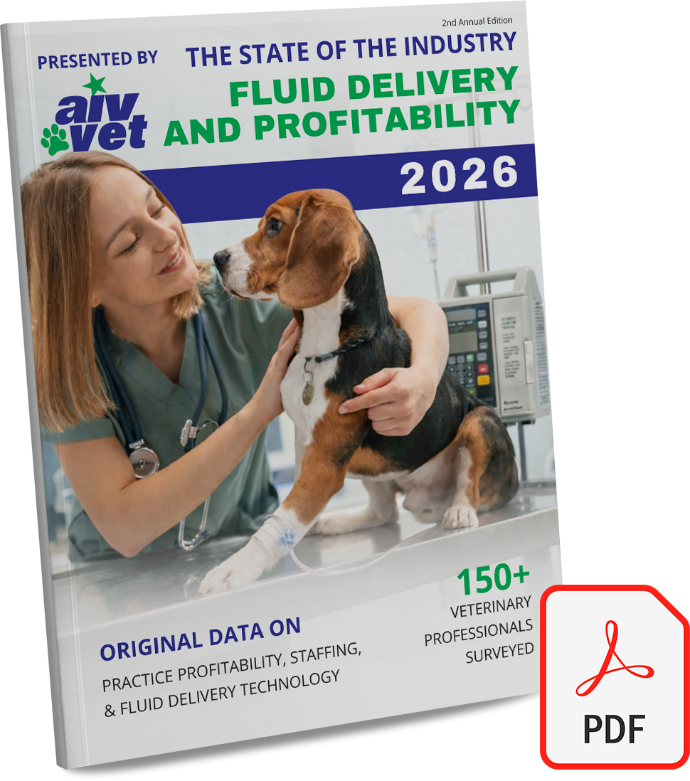
This blog covers one section of our 2026 Veterinary IV Pump Survey. The full report includes data on equipment spending, staffing costs, fluid therapy trends, and business sustainability across 114 companion animal practices.
Here's what our survey found
Response | % of practices |
We turn away 20%+ of appointment requests | 14% |
We turn away 10-20% of requests | 28% |
We turn away less than 10% | 25% |
We can accommodate most requests with overtime | 22% |
No impact, we're adequately staffed | 11% |
Only 11% of practices told us they're adequately staffed. The other 89% are either turning clients away, burning out their team to cover the workload, or shortening appointment slots to fit more in.
One independent practice owner in San Jose put a number on what that looks like in dollars:
"We turn away roughly 15% of people who call. At our average transaction value, that's around $180,000 a year and we can't do anything about it because I literally don't have enough people."
Independent practice owner, San Jose, CA
That's one practice. Multiply it across the 42% of the profession doing the same thing and the industry is leaving hundreds of millions in revenue on the table.
Hiring isn't the answer
The instinct when you're turning patients away is to post the job, raise the rate, and hope someone applies. That plan assumes the talent pool exists. It doesn't.
The AAVMC estimates the U.S. needs more than 50,000 additional veterinary technicians to meet current demand. At the current training capacity, it would take 30 years of graduates to close that gap. Mars Veterinary Health projects a shortage of 14,000 to 24,000 companion animal veterinarians by 2030.
According to a 2024 study in Frontiers in Veterinary Science, 43% of U.S. vet tech educational programs saw enrollment decline over the last five years, at the same time employment demand for techs is projected to grow 21% through 2032.
Demand is going up. The pipeline is going down. The gap is the problem.
What our survey respondents told us
86% of practices have at least one open position right now.
82% say licensed vet techs are the hardest role to fill.
51% experience annual turnover above 20%.
8% have stopped trying to fill certain roles entirely.
That last one is the most telling number in the survey. Eight percent of practices have given up on hiring certain roles and restructured around the gap. They've accepted that the right candidate isn't coming.
Reframing the problem as capacity
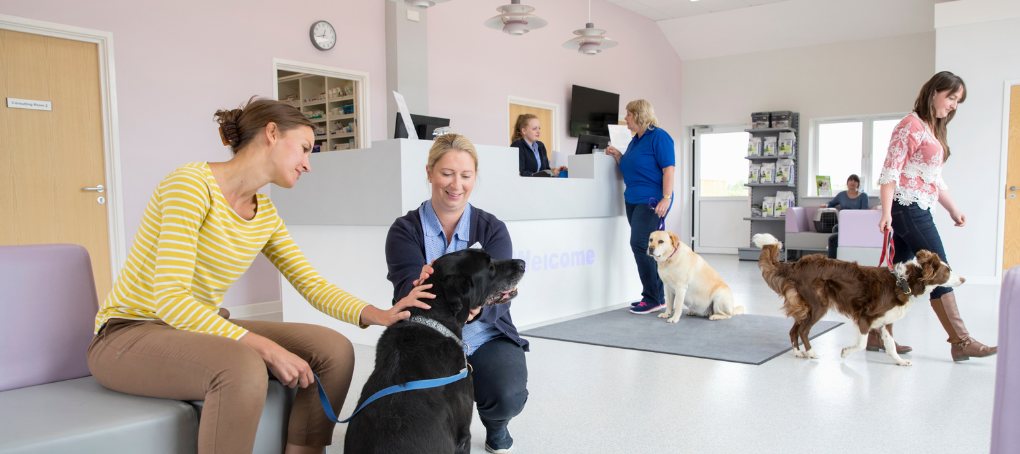
Image courtesy of Envato
If the hiring solution isn't available, there's only one path forward. You have to see more patients with the staff you already have.
That reframes staffing from an HR question to a productivity question. And productivity is something you can actually do something about.
A practice turning away 15% of appointment requests at an average transaction value of $250 to $350 is leaving somewhere between $100,000 and $200,000 a year on the table. Any intervention that lets the existing team absorb even a fraction of those requests is going to pay for itself within months.
So the question stops being "how do we hire more people" and starts being "where is our existing team spending time that a piece of equipment could handle instead?"
Where the hours actually go
When we asked practices what was eating their day, fluid monitoring came up repeatedly. Gravity drip setups need to be checked. Rates drift. Bags empty. Somebody has to be watching.
Our survey found that 49% of practices still use manual or gravity drip for half or more of their fluid therapy cases. For practices with only 1-2 pumps (33% of respondents), that number goes up, because pumps get reserved for critical cases and everything else defaults to manual.
Here's what manual monitoring actually costs in tech hours per patient per day:
Activity | Time per patient per day |
Initial drip rate calculation and setup | ~10 min |
Manual rate checks (every 30-60 min) | ~60 min |
Adjustments, recalculations, bag changes | ~6 min |
Total manual monitoring time | ~76 min |
Across a caseload of 5 to 6 fluid patients a day, that's 5 to 7 staff hours per week spent on something a pump handles automatically. That's the AIV Vet estimate, and it lines up with what our respondents described.
Seven hours a week is almost an entire tech shift. Redirect those hours toward patient intake, appointments, client communication, or recovery checks, and your practical capacity goes up without adding a single person to payroll.
How recovered hours turn into recovered revenue
Take a practice turning away 15% of requests. Say that's 10 appointments a week they can't take. At $275 average transaction value, that's $2,750 in lost weekly revenue, or roughly $143,000 a year.
Now add a pump that frees up 5-7 tech hours a week. Even if you only recover half of that capacity into billable appointments, that's an additional 5 appointments a week. At the same transaction value, that's $71,500 a year in revenue recaptured from patients who would otherwise be turned away.
A patient-ready recertified infusion pump from AIV Vet costs roughly $500 to $1,200. One pump pays for itself in a couple of weeks of recovered appointments.
Equipment as a staffing solution
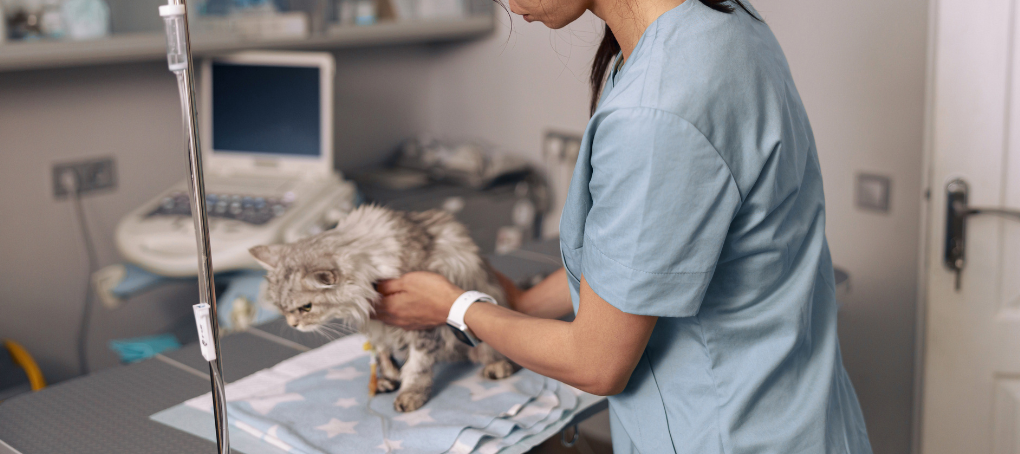
Image courtesy of Envato
Pumps do more than clinical work. In an environment where 86% of practices are understaffed and the pipeline can't catch up for a generation, a pump is a capacity tool. It returns tech hours to the practice. Those hours can be spent on the patients you're currently turning away.
AIV Vet's VetroCRI syringe pump was built for exactly this scenario:
Works with standard syringes your practice already stocks.
No complex software or training overhead.
Eliminates the need for manual drip rate checks.
Returns an estimated 5-7 staff hours per week after the first unit is deployed.
For practices that want to stretch the equipment budget further, patient-ready recertified pumps from brands your team already knows (Baxter, Hospira, B. Braun, Medfusion) run 30 to 50% less than new, with a 1-year warranty and a comprehensive multi-point inspection.
We're not trying to sell you a pump here. We're trying to help you stop bleeding tech hours on tasks that don't need a human.
What this means for your practice
You can't hire your way out of a 30-year pipeline gap. You can't outbid corporate groups on every licensed tech. What you can do is look at where your team's hours are going and ask whether every one of those hours requires a human.
If you're turning away patients while your techs are hand-counting drips, you're trading revenue for a task that a pump does automatically.
If your equipment budget feels tight, recertified pumps at 30-50% below new cost let you expand capacity without the cash hit of buying new.
If you've already raised wages, added PTO, and done everything else on the retention list, the lever you haven't pulled yet is reducing the workload per staff member through better equipment.
Your team can only see as many patients as your workflow lets them. Take the manual monitoring out of the day, and the workflow changes.
Sources
- AIV Vet 2026 Veterinary IV Pump Survey, 114 companion animal practices.
- AVMA 2025 Report on the Economic State of the Veterinary Profession.
- Mars Veterinary Health, "Pet Healthcare in the U.S.: Another Look at the Veterinarian Workforce" (2023).
- AAVMC Statement on U.S. Veterinary Workforce (July 2022).
- Frontiers in Veterinary Science, "Enrollment, Retention & Graduation Trends in VT/N Educational Programs" (2024).